

Giải đề IELTS Writing Task 2 – Topic: Cultural Identity
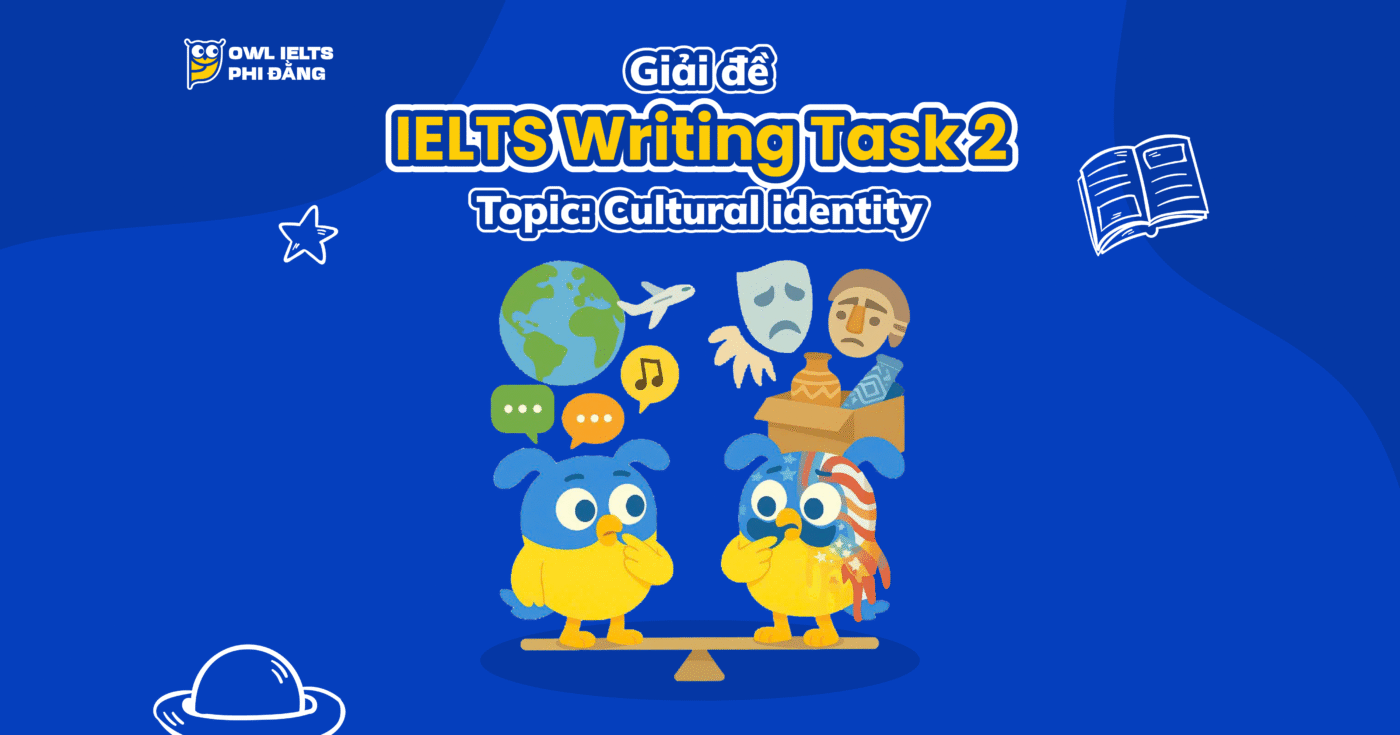
1. Giải đề IELTS Writing Task 2
Some people think the increasing business and cultural contact between countries brings many positive effects. Others say it causes the loss of national identities. Discuss both of these views and give your own opinion.
2. Hướng dẫn làm bài nhanh Giải đề IELTS Writing Task 2
- Dạng bài: Discuss both views + opinion
- Yêu cầu: Trình bày 2 quan điểm đối lập, đánh giá, nêu ý kiến cá nhân rõ ràng.
- Bố cục khuyến nghị (4 đoạn):
- Mở bài: paraphrase + thesis nêu sẽ bàn cả hai phía + kết luận nghiêng về bên nào.
- Thân bài 1: lợi ích của giao lưu kinh tế–văn hóa.
- Thân bài 2: rủi ro mất bản sắc dân tộc.
- Kết bài: khẳng định lập trường + điều kiện/giải pháp để dung hòa.
3. Dàn ý PEER chi tiết Giải đề IELTS Writing Task 2
3.1. Body 1 – Giao lưu kinh tế và văn hóa mang lại nhiều lợi ích
- P (Point): Việc tăng cường giao lưu quốc tế về kinh tế và văn hóa giúp thúc đẩy tăng trưởng kinh tế và nâng cao sự hiểu biết giữa các quốc gia.
- E (Explanation):
- Thương mại quốc tế mở rộng thị trường, thu hút FDI, kích thích đổi mới nhờ cạnh tranh.
- Giao lưu văn hóa giúp con người cởi mở, khoan dung, có góc nhìn đa chiều.
- E (Example): Sự kiện toàn cầu như Olympic hay lễ hội văn hóa quốc tế tạo cơ hội đối thoại liên văn hóa, giảm định kiến, tăng đoàn kết.
- R (Reasoning): Hợp tác kinh tế–văn hóa không chỉ mang lại lợi ích vật chất mà còn xây dựng hiểu biết lẫn nhau, là nền tảng cho hòa bình và phát triển bền vững.
3.2. Body 2 – Toàn cầu hóa có thể làm phai nhạt bản sắc
- P (Point): Nhiều người cho rằng toàn cầu hóa làm phai nhạt truyền thống và bản sắc văn hóa dân tộc.
- E (Explanation):
- Sự lan rộng của truyền thông, thời trang, lối sống phương Tây có thể lấn át giá trị địa phương.
- Giới trẻ chuộng thương hiệu quốc tế, lối sống ngoại lai hơn là duy trì phong tục cũ.
- E (Example): Ở một số nước đang phát triển, nghệ thuật dân gian, ngôn ngữ bản địa, tập quán truyền thống mai một; thậm chí sử dụng tiếng Anh thay tiếng mẹ đẻ trong giao tiếp hằng ngày.
- R (Reasoning): Mất mát văn hóa làm suy giảm lòng tự hào dân tộc, khiến thế giới đơn điệu, giảm sự đa dạng – một nguồn lực của nhân loại.
Tổng hợp giải đề IELTS Writing được biên soạn bởi đội ngũ chuyên môn giáo viên 8.0 IELTS.
4. Template mở bài – kết bài (Band 7+) Giải đề IELTS Writing Task 2
4.1. Mở bài (Paraphrase + Thesis)
- Paraphrase đề: In an increasingly interconnected world, business and cultural exchanges across borders have become commonplace.
- Thesis gợi ý: While such interactions can catalyse economic growth and mutual understanding, they may also erode distinctive traditions. This essay discusses both sides before explaining why the benefits can outweigh the risks if preservation policies are in place.
4.2. Kết bài (Restate + Opinion + Condition)
- Mẫu: Although cross-border engagement may endanger certain traditions, I believe its overall gains are greater provided that governments and communities invest in cultural education, legal protection, and inclusive heritage programmes.
5. Liên kết ý & ngôn ngữ học thuật
- Đưa quan điểm đối lập: On the one hand / On the other hand / Conversely / By contrast
- Bổ sung lý lẽ: Moreover / Furthermore / In addition
- Giải thích – hệ quả: This leads to / Consequently / As a result
- Làm rõ điều kiện: Provided that / As long as / On the condition that
- Chốt luận: Overall / In conclusion / Ultimately
6. Bài mẫu tham khảo
In the era of globalization, business and cultural exchanges among countries have become increasingly common. While some believe this trend promotes economic progress and international understanding, others argue that it threatens national identity. Both perspectives merit consideration before arriving at a reasoned conclusion.
On the one hand, closer global interaction brings substantial advantages. Economically, international trade enables countries to access new markets, attract investment, and boost innovation through competition. Culturally, it fosters understanding and appreciation among nations. When people experience different cuisines, arts, or customs, they tend to become more open-minded and tolerant. For example, global events such as the Olympic Games or cultural festivals create opportunities for cross-cultural dialogue, helping to reduce prejudice and promote global harmony.
On the other hand, critics warn that globalization can dilute cultural uniqueness. The worldwide spread of Western media, fashion, and consumer habits often overshadows local traditions and values. Young people may prioritize global brands or foreign lifestyles over their own cultural heritage, leading to the gradual disappearance of traditional art forms, languages, and customs. In some developing nations, for instance, indigenous cultures are being replaced by Westernized practices, resulting in a loss of national identity and cultural pride.
In conclusion, although global business and cultural contact may endanger certain traditional aspects, I believe the benefits outweigh the drawbacks. With thoughtful education and cultural preservation policies, nations can enjoy the fruits of globalization while maintaining their distinctive identities.
7. Phân tích vì sao bài mẫu đạt Band 7.0+
- Task Response: Trả lời đúng yêu cầu “discuss both views + opinion”, có ví dụ, có điều kiện bảo tồn văn hóa.
- Coherence & Cohesion: Bố cục 4 đoạn rõ ràng; dùng liên kết ý mượt; luận điểm–luận chứng chặt chẽ.
- Lexical Resource: Collocations học thuật (boost innovation, cross-cultural dialogue, dilute cultural uniqueness, preservation policies…).
- Grammar Range & Accuracy: Câu phức linh hoạt (when-clauses, participle clauses), mệnh đề nhượng bộ/điều kiện.

8. Từ vựng chủ điểm
| Từ/Cụm | Nghĩa | Ví dụ câu ngắn |
|---|---|---|
| globalization | toàn cầu hóa | Globalization accelerates knowledge transfer. |
| business and cultural exchanges | trao đổi kinh tế và văn hóa | Business and cultural exchanges foster trust. |
| economic progress | tiến bộ kinh tế | Openness can translate into economic progress. |
| international understanding | sự hiểu biết quốc tế | Exchanges nurture international understanding. |
| national identity | bản sắc dân tộc | Tourism can strengthen national identity if curated well. |
| access new markets | tiếp cận thị trường mới | Free trade allows firms to access new markets. |
| attract investment | thu hút đầu tư | Stable institutions attract investment. |
| boost innovation | thúc đẩy đổi mới | Competition often boosts innovation. |
| foster understanding | thúc đẩy thấu hiểu | Arts festivals foster understanding. |
| cross-cultural dialogue | đối thoại liên văn hóa | Cross-cultural dialogue reduces prejudice. |
| dilute cultural uniqueness | làm phai nhạt bản sắc | Imported media may dilute cultural uniqueness. |
| consumer habits | thói quen tiêu dùng | Platforms shape global consumer habits. |
| cultural heritage | di sản văn hóa | Schools should teach cultural heritage. |
| indigenous cultures | văn hóa bản địa | Indigenous cultures deserve protection. |
| Westernized practices | thói quen theo phong cách phương Tây | Cities adopt Westernized practices rapidly. |
| cultural preservation | bảo tồn văn hóa | Cultural preservation requires funding. |
| distinctive identities | bản sắc riêng | Local crafts embody distinctive identities. |
| fruits of globalization | thành quả của toàn cầu hóa | We can enjoy the fruits of globalization responsibly. |
Tiết kiệm 70% thời gian ôn luyện nhờ Giáo trình IELTS cập nhật liên tục
Lạm dụng mẹo hay học thuộc lòng chỉ khiến bạn lúng túng trước đề thi thật. Tại OWL, chìa khóa bứt phá nằm ở Ý Tưởng Đa Chiều. Bằng cách kết hợp Giáo trình IELTS cập nhật liên tục theo quý, sát đề thi thật và tự do phát triển ý tưởng, OWL giúp bạn nắm chắc kiến thức và tiết kiệm 70% thời gian học. Đây chính là con đường ngắn nhất để sở hữu tấm bằng IELTS và mở rộng cơ hội!
9. Paraphrase ý chính
- increasing business and cultural contact → closer cross-border interaction / intensified economic and cultural ties
- brings many positive effects → delivers substantial benefits / yields notable gains
- loss of national identities → erosion of cultural distinctiveness / dilution of tradition
10. Cùng nhà Cú Brainstorm nhanh cho Body 1 & 2
10.1. Lợi ích (ủng hộ giao lưu)
- Chuyển giao công nghệ, chuẩn quản trị tốt.
- Nâng chuẩn dịch vụ/giá thành có lợi cho người tiêu dùng.
- Du lịch bền vững tạo việc làm, phục hồi di sản.
- Hợp tác giáo dục, học bổng, trao đổi sinh viên.
10.2. Rủi ro (lo ngại mất bản sắc)
- Thương mại hóa lễ hội, “bản địa hóa giả”.
- Tiếng mẹ đẻ suy giảm trong không gian số.
- Chuỗi cung ứng toàn cầu làm biến đổi nghề thủ công.
- “Văn hóa đại chúng” lấn át nghệ thuật truyền thống.
IELTS Writing Task 2 IELTS Writing Task 2 IELTS Writing Task 2 IELTS Writing Task 2 IELTS Writing Task 2 IELTS Writing Task 2 IELTS Writing Task 2 IELTS Writing Task 2 IELTS Writing Task 2 IELTS Writing Task 2