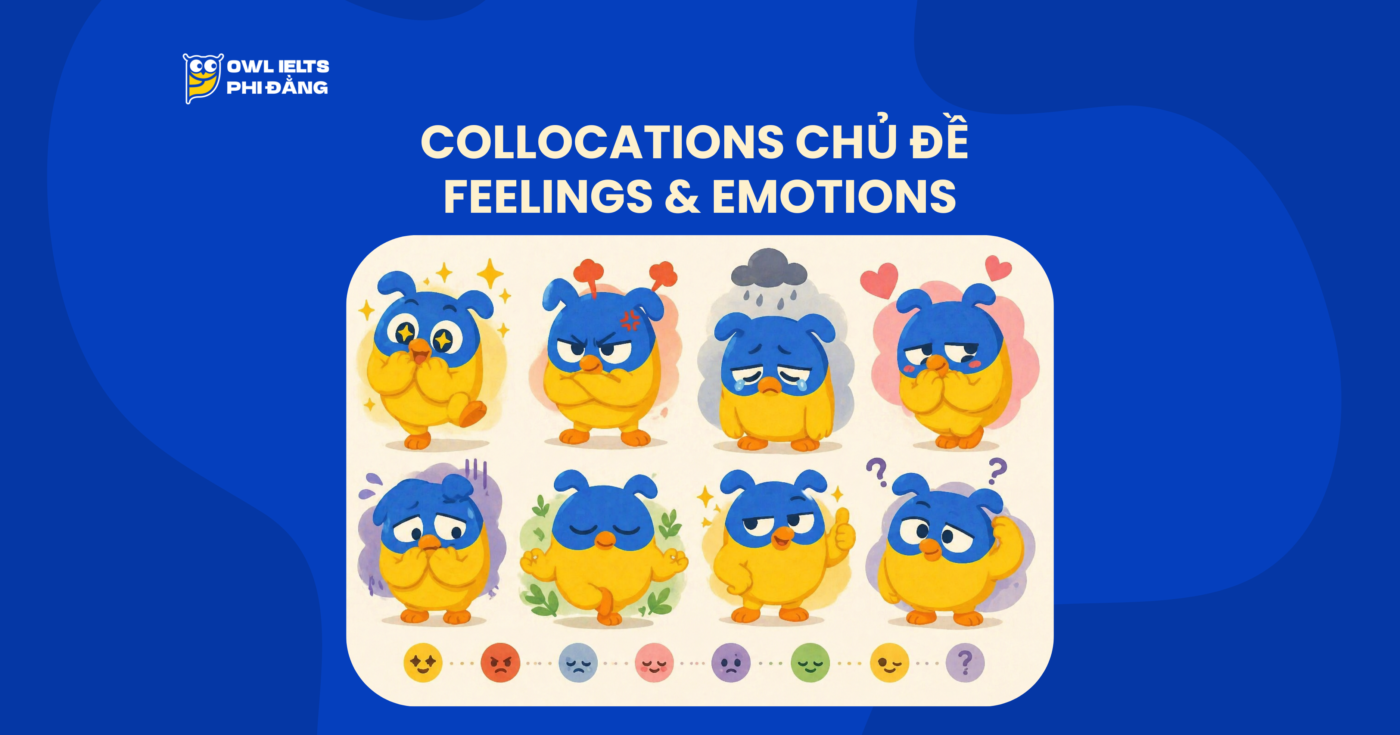
Collocations chủ đề Feelings & Emotions – 100+ cụm từ giúp diễn đạt cảm xúc tự nhiên trong IELTS
1. Vì sao Collocations chủ đề Feelings & Emotions quan trọng trong IELTS?
Feelings & Emotions là một chủ đề rất dễ gặp trong IELTS, đặc biệt ở Speaking. Bạn có thể được hỏi về cảm xúc khi đi du lịch, khi nhận quà, khi gặp người thân, khi tham gia một sự kiện đáng nhớ hoặc khi đối mặt với áp lực học tập, công việc.
Bạn có thể gặp chủ đề này ở:
- Speaking Part 1: bạn có thường cảm thấy căng thẳng không, điều gì khiến bạn vui, bạn làm gì khi buồn.
- Speaking Part 2: miêu tả một lần bạn cảm thấy hạnh phúc, lo lắng, tự hào, thất vọng hoặc bất ngờ.
- Speaking Part 3: con người ngày nay có chịu nhiều áp lực hơn không, mạng xã hội ảnh hưởng đến cảm xúc như thế nào, trẻ em nên học cách kiểm soát cảm xúc ra sao.
- Writing Task 2: các đề liên quan đến mental health, stress, work pressure, happiness, social media, education pressure hoặc emotional development.
Vấn đề là nhiều bạn khi nói về cảm xúc thường chỉ dùng các từ đơn giản như happy, sad, angry, stressed, nervous, excited. Những từ này không sai, nhưng nếu dùng quá nhiều, câu trả lời sẽ dễ bị basic và thiếu sắc thái.
Thay vì nói:
I was very happy.
Bạn có thể nói:
I felt a deep sense of happiness when I finally achieved my goal.
Hoặc thay vì nói:
Students are stressed.
Bạn có thể viết:
Many students experience intense pressure because they have to meet high academic expectations.
Những collocations như:
- a deep sense of happiness
- feel emotionally drained
- experience intense pressure
- control one’s emotions
- cope with stress
- mental well-being
- emotional support
- overcome negative feelings
- feel a sense of relief
- be overwhelmed by emotions
sẽ giúp bạn diễn đạt cảm xúc chính xác, tự nhiên và có chiều sâu hơn.
OWL IELTS tip: Với chủ đề Feelings & Emotions, bạn không nên chỉ học từ đơn như happy hoặc sad. Hãy học theo cụm, vì cảm xúc trong IELTS thường cần được diễn đạt theo mức độ, nguyên nhân và kết quả. Một câu có collocation đúng sẽ giúp bài nói và bài viết nghe tự nhiên hơn rất nhiều.
2. Collocations học thuật chủ đề Feelings & Emotions
Trong phần này, Nhà Cú chia collocations theo từng nhóm cấu trúc để bạn dễ học, dễ nhớ và dễ áp dụng vào IELTS Speaking lẫn Writing.
2.1. Adjective + Noun – Các cụm mô tả cảm xúc tự nhiên và giàu sắc thái
Đây là nhóm collocations rất hữu ích khi bạn cần mô tả trạng thái cảm xúc, tâm trạng hoặc phản ứng tinh thần của một người.
-
- positive emotions: cảm xúc tích cực
- negative emotions: cảm xúc tiêu cực
- mixed feelings: cảm xúc lẫn lộn
- strong emotions: cảm xúc mạnh
- deep sadness: nỗi buồn sâu sắc
- intense fear: nỗi sợ dữ dội
- great excitement: sự hào hứng lớn
- extreme happiness: niềm hạnh phúc tột độ
- inner peace: sự bình yên bên trong
- emotional pain: nỗi đau tinh thần
- emotional stress: căng thẳng cảm xúc
- emotional support: sự hỗ trợ tinh thần
- emotional stability: sự ổn định cảm xúc
- emotional intelligence: trí tuệ cảm xúc
- mental pressure: áp lực tinh thần
- constant anxiety: sự lo âu kéo dài
- deep disappointment: sự thất vọng sâu sắc
- pleasant surprise: sự bất ngờ dễ chịu
- painful memory: ký ức đau buồn
- unforgettable experience: trải nghiệm khó quên
- positive mindset: tư duy tích cực
- negative mindset: tư duy tiêu cực
- calm attitude: thái độ bình tĩnh
- good mood: tâm trạng tốt
- bad mood: tâm trạng xấu
Ví dụ:
-
- I had mixed feelings when I left my hometown because I was excited about the future but also sad to say goodbye to my family.
- Students need emotional support from parents and teachers when they experience mental pressure.
- A person with emotional stability can stay calm even when facing difficult situations.
Nhóm này rất phù hợp với Speaking Part 2 khi bạn cần kể về một trải nghiệm đáng nhớ hoặc Writing Task 2 khi phân tích về áp lực, sức khỏe tinh thần và giáo dục cảm xúc.
2.2. Verb + Noun – Nhóm collocations giúp diễn đạt hành động và phản ứng cảm xúc
Nhóm Verb + Noun giúp câu của bạn không chỉ gọi tên cảm xúc, mà còn thể hiện được quá trình con người trải qua, kiểm soát hoặc vượt qua cảm xúc đó.
-
- express emotions: bộc lộ cảm xúc
- hide emotions: che giấu cảm xúc
- control emotions: kiểm soát cảm xúc
- manage stress: quản lý căng thẳng
- reduce stress: giảm căng thẳng
- relieve pressure: giải tỏa áp lực
- experience anxiety: trải qua sự lo âu
- feel excitement: cảm thấy hào hứng
- feel relief: cảm thấy nhẹ nhõm
- feel disappointment: cảm thấy thất vọng
- feel sympathy: cảm thấy cảm thông
- show empathy: thể hiện sự đồng cảm
- show gratitude: thể hiện lòng biết ơn
- lose confidence: mất tự tin
- build confidence: xây dựng sự tự tin
- boost morale: nâng cao tinh thần
- lift someone’s mood: làm ai đó vui hơn
- hurt someone’s feelings: làm tổn thương cảm xúc của ai
- overcome fear: vượt qua nỗi sợ
- overcome negative feelings: vượt qua cảm xúc tiêu cực
- develop emotional intelligence: phát triển trí tuệ cảm xúc
- protect mental well-being: bảo vệ sức khỏe tinh thần
- maintain emotional balance: duy trì sự cân bằng cảm xúc
- deal with frustration: đối mặt với sự bực bội
- create a sense of happiness: tạo ra cảm giác hạnh phúc
Ví dụ:
-
- Young people should learn how to control emotions and manage stress from an early age.
- Talking to close friends can help people relieve pressure and lift their mood.
- Schools should teach students how to develop emotional intelligence and maintain emotional balance.
Nhóm này cực kỳ hữu ích trong Writing Task 2 vì bạn có thể dùng để phân tích giải pháp, đặc biệt trong các đề về stress, mental health hoặc education.
2.3. Verb + Preposition – Nhóm dễ dùng sai nhưng rất quan trọng
Đây là nhóm giúp câu nói và câu viết nghe tự nhiên hơn. Rất nhiều bạn biết từ nhưng dùng sai giới từ, khiến câu bị “dịch từ tiếng Việt sang tiếng Anh”.
-
- worry about something: lo lắng về điều gì
- feel nervous about something: cảm thấy lo lắng về điều gì
- be excited about something: hào hứng về điều gì
- be disappointed with something: thất vọng về điều gì
- be proud of someone/something: tự hào về ai/điều gì
- be grateful for something: biết ơn vì điều gì
- be afraid of something: sợ điều gì
- be scared of something: sợ điều gì
- be ashamed of something: xấu hổ về điều gì
- be satisfied with something: hài lòng với điều gì
- be overwhelmed by emotions: bị cảm xúc lấn át
- be under pressure: chịu áp lực
- cope with stress: đối phó với căng thẳng
- deal with anxiety: xử lý sự lo âu
- suffer from depression: chịu đựng trầm cảm
- recover from emotional pain: hồi phục sau nỗi đau tinh thần
- burst into tears: bật khóc
- break down in tears: bật khóc vì quá xúc động
- calm down after an argument: bình tĩnh lại sau một cuộc tranh cãi
- open up about feelings: mở lòng về cảm xúc
Ví dụ:
-
- I was nervous about my IELTS Speaking test, but I tried to calm down before entering the exam room.
- Many teenagers are under pressure because they have to cope with stress from school and family expectations.
- Some people find it difficult to open up about feelings, even when they are overwhelmed by emotions.
Khi luyện Speaking, bạn nên tránh các lỗi như worry something, proud about myself hoặc disappointed about the result. Cụm đúng thường là worry about something, be proud of oneself và be disappointed with the result.
2.4. Noun + Noun – Cụm danh từ học thuật dùng tốt trong Writing
Nhóm Noun + Noun rất phù hợp với IELTS Writing Task 2, đặc biệt khi bạn bàn về sức khỏe tinh thần, áp lực xã hội hoặc cảm xúc của người trẻ.
-
- stress level: mức độ căng thẳng
- stress management: quản lý căng thẳng
- emotional control: khả năng kiểm soát cảm xúc
- emotional response: phản ứng cảm xúc
- emotional development: sự phát triển cảm xúc
- emotional maturity: sự trưởng thành về cảm xúc
- emotional well-being: sức khỏe cảm xúc
- mental well-being: sức khỏe tinh thần
- mental health: sức khỏe tinh thần
- mental pressure: áp lực tinh thần
- anxiety disorder: rối loạn lo âu
- mood swing: sự thay đổi tâm trạng thất thường
- comfort zone: vùng an toàn
- support system: hệ thống hỗ trợ
- sense of relief: cảm giác nhẹ nhõm
- sense of happiness: cảm giác hạnh phúc
- sense of achievement: cảm giác đạt được thành tựu
- feeling of loneliness: cảm giác cô đơn
- fear of failure: nỗi sợ thất bại
- source of stress: nguồn gây căng thẳng
- pressure point: điểm gây áp lực
- coping strategy: chiến lược đối phó
- relaxation technique: kỹ thuật thư giãn
- work pressure: áp lực công việc
- academic pressure: áp lực học tập
Ví dụ:
-
- High stress levels can negatively affect students’ mental well-being and academic performance.
- A strong support system can help people deal with emotional pain more effectively.
- The fear of failure is a common source of stress among young people.
Nhóm này giúp bài Writing của bạn nghe học thuật hơn, đặc biệt khi bạn cần viết câu chủ đề hoặc câu giải thích về nguyên nhân và hệ quả.
2.5. Adverb + Adjective – Tạo sắc thái cảm xúc tự nhiên hơn
Thay vì dùng quá nhiều very happy, very sad, very nervous, bạn có thể dùng các cụm sau để thể hiện mức độ cảm xúc rõ hơn.
-
- deeply moved: vô cùng xúc động
- deeply disappointed: vô cùng thất vọng
- deeply concerned: vô cùng lo lắng/quan ngại
- extremely anxious: cực kỳ lo âu
- highly stressful: rất căng thẳng
- emotionally exhausted: kiệt sức về mặt cảm xúc
- emotionally drained: cạn kiệt năng lượng cảm xúc
- mentally tired: mệt mỏi về tinh thần
- slightly nervous: hơi lo lắng
- visibly upset: buồn bã rõ rệt
- genuinely happy: hạnh phúc thật lòng
- truly grateful: thật sự biết ơn
- incredibly proud: vô cùng tự hào
- pleasantly surprised: bất ngờ một cách vui vẻ
- completely overwhelmed: hoàn toàn bị choáng ngợp
- emotionally vulnerable: dễ bị tổn thương về cảm xúc
- mentally prepared: chuẩn bị tinh thần
- emotionally mature: trưởng thành về mặt cảm xúc
Ví dụ:
-
- I was pleasantly surprised when my friends prepared a birthday party for me.
- After weeks of working overtime, many employees feel emotionally exhausted and mentally tired.
- My parents were incredibly proud when I passed the entrance exam.
Nhóm này đặc biệt hữu ích trong Speaking vì nó giúp bạn nói cảm xúc một cách tự nhiên, không bị lặp lại các từ quá cơ bản như very happy hoặc very sad.
3. Collocations theo chủ đề con trong Feelings & Emotions
Để học dễ hơn, bạn nên chia Feelings & Emotions thành nhiều nhánh nhỏ. Mỗi nhánh sẽ phù hợp với một nhóm câu hỏi khác nhau trong IELTS Speaking và Writing.
3.1. Cảm xúc tích cực
Nhóm này rất hữu ích khi bạn nói về một trải nghiệm vui, một thành tựu, một món quà, một chuyến đi hoặc một sự kiện đáng nhớ.
-
- feel over the moon: cảm thấy cực kỳ vui
- feel a sense of happiness: cảm thấy hạnh phúc
- feel a sense of achievement: cảm thấy thành tựu
- feel a sense of relief: cảm thấy nhẹ nhõm
- feel proud of oneself: cảm thấy tự hào về bản thân
- be full of excitement: tràn đầy hào hứng
- be in a good mood: có tâm trạng tốt
- bring joy to someone: mang lại niềm vui cho ai
- create happy memories: tạo ra ký ức vui vẻ
- lift someone’s spirits: nâng cao tinh thần của ai
- boost someone’s confidence: tăng sự tự tin cho ai
- feel grateful for something: cảm thấy biết ơn vì điều gì
Ví dụ:
-
- I was over the moon when I received my IELTS result because it gave me a sense of achievement.
- Spending time with my family always brings joy to me and helps me create happy memories.
- My teacher’s encouragement really boosted my confidence before the speaking test.
Nhóm này rất hợp cho Speaking Part 2 với các đề như Describe a happy event, Describe a time you felt proud, hoặc Describe a memorable experience.
3.2. Cảm xúc tiêu cực
Nhóm này giúp bạn diễn đạt nỗi buồn, sự thất vọng, tức giận hoặc tổn thương một cách tự nhiên hơn.
-
- feel down: cảm thấy buồn
- feel upset: cảm thấy buồn bực
- feel disappointed: cảm thấy thất vọng
- feel frustrated: cảm thấy bực bội
- feel lonely: cảm thấy cô đơn
- feel homesick: nhớ nhà
- feel guilty: cảm thấy có lỗi
- feel embarrassed: cảm thấy xấu hổ
- feel ashamed: cảm thấy xấu hổ, hổ thẹn
- feel rejected: cảm thấy bị từ chối
- feel emotionally hurt: cảm thấy bị tổn thương
- be in a bad mood: có tâm trạng không tốt
- have a heavy heart: cảm thấy nặng lòng
- be close to tears: gần như sắp khóc
- burst into tears: bật khóc
Ví dụ:
-
- I felt disappointed when I did not get the score I expected.
- When I first moved to another city, I felt homesick and had a heavy heart for several weeks.
- She burst into tears because she felt emotionally hurt by her friend’s words.
Khi nói về cảm xúc tiêu cực, bạn không cần dùng từ quá nặng. Những cụm như feel down, feel disappointed, feel frustrated hoặc feel emotionally hurt đã đủ tự nhiên và phù hợp với IELTS.
3.3. Căng thẳng, lo âu và áp lực
Đây là nhóm rất quan trọng trong Writing Task 2 và Speaking Part 3 vì các đề về học tập, công việc và xã hội hiện đại thường liên quan đến stress.
-
- feel stressed out: cảm thấy rất căng thẳng
- feel under pressure: cảm thấy bị áp lực
- experience high stress levels: trải qua mức độ căng thẳng cao
- suffer from anxiety: chịu đựng sự lo âu
- deal with anxiety: xử lý sự lo âu
- cope with stress: đối phó với căng thẳng
- face academic pressure: đối mặt với áp lực học tập
- face work pressure: đối mặt với áp lực công việc
- reduce stress levels: giảm mức độ căng thẳng
- relieve mental pressure: giải tỏa áp lực tinh thần
- feel mentally exhausted: cảm thấy kiệt sức tinh thần
- feel emotionally drained: cảm thấy cạn kiệt cảm xúc
- be overwhelmed by responsibilities: bị choáng ngợp bởi trách nhiệm
- struggle with negative emotions: vật lộn với cảm xúc tiêu cực
- need emotional support: cần sự hỗ trợ tinh thần
Ví dụ:
-
- Many students face academic pressure and experience high stress levels during exam seasons.
- People who work long hours may feel mentally exhausted and emotionally drained.
- To cope with stress, young people need emotional support from family, friends and teachers.
Nhóm này nên được ưu tiên nếu bạn đang luyện Writing Task 2 về giáo dục, công việc, sức khỏe tinh thần hoặc cuộc sống hiện đại.
3.4. Kiểm soát cảm xúc và phục hồi tinh thần
Trong IELTS, chủ đề cảm xúc không chỉ dừng ở việc “vui hay buồn”. Bạn cũng cần biết cách nói về việc kiểm soát cảm xúc, vượt qua khó khăn và phục hồi sau áp lực.
-
- control one’s emotions: kiểm soát cảm xúc
- manage negative emotions: quản lý cảm xúc tiêu cực
- maintain emotional balance: duy trì sự cân bằng cảm xúc
- stay calm under pressure: giữ bình tĩnh khi chịu áp lực
- develop emotional resilience: phát triển khả năng phục hồi cảm xúc
- recover from emotional pain: hồi phục sau nỗi đau tinh thần
- overcome fear: vượt qua nỗi sợ
- overcome disappointment: vượt qua sự thất vọng
- build mental strength: xây dựng sức mạnh tinh thần
- develop coping strategies: phát triển chiến lược đối phó
- practise relaxation techniques: thực hành kỹ thuật thư giãn
- take a break from stress: tạm nghỉ khỏi căng thẳng
- clear one’s mind: làm đầu óc nhẹ nhàng hơn
- regain confidence: lấy lại sự tự tin
- find inner peace: tìm thấy sự bình yên bên trong
Ví dụ:
-
- Students should learn how to control their emotions and stay calm under pressure.
- Regular exercise can help people clear their mind and maintain emotional balance.
- After failing the exam, he slowly regained confidence and overcame disappointment.
Nhóm này rất tốt cho các bài nói hoặc bài viết mang tính giải pháp, đặc biệt khi bạn đề xuất cách giảm stress hoặc cải thiện sức khỏe tinh thần.
3.5. Cảm xúc trong các mối quan hệ
Cảm xúc thường gắn với gia đình, bạn bè, tình bạn và các mối quan hệ xã hội. Nhóm này giúp bạn nói sâu hơn khi miêu tả người thân hoặc các tình huống giao tiếp.
-
- feel emotionally connected: cảm thấy kết nối về mặt cảm xúc
- feel a sense of belonging: cảm thấy mình thuộc về một nơi nào đó
- show empathy: thể hiện sự đồng cảm
- show sympathy: thể hiện sự cảm thông
- offer emotional support: cung cấp sự hỗ trợ tinh thần
- hurt someone’s feelings: làm tổn thương cảm xúc của ai
- share personal feelings: chia sẻ cảm xúc cá nhân
- open up about emotions: mở lòng về cảm xúc
- build emotional trust: xây dựng sự tin tưởng về mặt cảm xúc
- resolve emotional conflicts: giải quyết mâu thuẫn cảm xúc
- create a supportive environment: tạo môi trường hỗ trợ
- feel understood: cảm thấy được thấu hiểu
- feel ignored: cảm thấy bị phớt lờ
- feel appreciated: cảm thấy được trân trọng
- feel valued: cảm thấy có giá trị
Ví dụ:
-
- In a close friendship, people should share personal feelings and offer emotional support to each other.
- Children who feel emotionally connected to their parents are more likely to feel understood and secure.
- Careless words can hurt someone’s feelings, even if we do not mean to be unkind.
Nhóm này rất hợp với Speaking Part 2 khi bạn miêu tả một người quan trọng hoặc Part 3 khi bàn về vai trò của gia đình, bạn bè và giao tiếp cảm xúc.
4. Mẫu câu Speaking dùng collocations chủ đề Feelings & Emotions
Bạn có thể dùng các câu sau trong IELTS Speaking, sau đó chỉnh lại theo trải nghiệm thật của mình.
-
- I was over the moon when I received my IELTS result because I had worked really hard for it.
- I usually feel under pressure before an important exam, but I try to stay calm and focus on what I can control.
- Spending time with my close friends always lifts my mood and helps me relieve stress.
- I felt a sense of relief when I finished my final presentation.
- I sometimes feel emotionally drained after a long day of studying and working.
- My parents always offer emotional support when I struggle with negative emotions.
- I think young people should learn how to control their emotions and cope with stress.
- Social media can make teenagers feel insecure and increase their stress levels.
Nếu muốn nâng cấp câu trả lời, bạn có thể thêm nguyên nhân hoặc kết quả phía sau:
-
- I was over the moon when I received my IELTS result because it gave me a strong sense of achievement after months of preparation.
- I usually feel under pressure before an important exam, but taking deep breaths helps me stay calm and clear my mind.
- Spending time with my close friends always lifts my mood because they make me feel understood and emotionally supported.
5. Mẫu đoạn văn Writing Task 2 dùng collocations
Đề bài: Many people today experience high levels of stress. What are the causes of this problem, and what can be done to reduce it?
Đoạn văn mẫu tham khảo:
One major reason why people today experience high stress levels is the growing pressure from work and education. Many employees have to work long hours, deal with tight deadlines and remain constantly available online. As a result, they may feel mentally exhausted and emotionally drained. Similarly, students often face academic pressure because they are expected to achieve high scores, join extracurricular activities and prepare for future careers at the same time. These expectations can become a major source of stress, especially for young people who have not developed effective coping strategies.
To reduce stress, individuals and society need to pay more attention to mental well-being. On a personal level, people should learn how to manage stress, maintain emotional balance and take regular breaks to clear their mind. Schools and workplaces should also create a supportive environment where people feel comfortable asking for help. In addition, family members and friends can offer emotional support, which may help those under pressure regain confidence and overcome negative feelings.
Bạn có thể học cấu trúc đoạn này và thay đổi collocations theo từng đề khác nhau.
Nếu đề nói về học sinh và áp lực học tập, bạn có thể dùng:
-
- academic pressure
- high stress levels
- fear of failure
- emotional support
- mental well-being
- cope with stress
Nếu đề nói về công việc, bạn có thể dùng:
-
- work pressure
- feel emotionally drained
- feel mentally exhausted
- manage stress
- maintain emotional balance
- relieve pressure
Nếu đề nói về mạng xã hội và cảm xúc, bạn có thể dùng:
-
- negative emotions
- feel insecure
- low self-confidence
- emotional well-being
- social media pressure
- protect mental health

6. Cách học collocations chủ đề Feelings & Emotions hiệu quả
Để học tốt chủ đề này, bạn không nên chỉ học nghĩa tiếng Việt của từng cụm. Feelings & Emotions là topic cần gắn với trải nghiệm thật, vì vậy cách học tốt nhất là học theo tình huống, sau đó tự đặt câu với cảm xúc của chính mình.
6.1. Học theo nhóm cảm xúc
Bạn có thể chia Feelings & Emotions thành 5 nhóm chính:
-
- Positive feelings: cảm xúc tích cực
- Negative feelings: cảm xúc tiêu cực
- Stress and anxiety: căng thẳng và lo âu
- Emotional control: kiểm soát cảm xúc
- Relationships and emotions: cảm xúc trong các mối quan hệ
Mỗi ngày chỉ cần chọn một nhóm, học khoảng 8–10 collocations và đặt câu với một tình huống thật.
Ví dụ, nếu học nhóm Stress and anxiety, bạn có thể học:
-
- feel under pressure
- experience high stress levels
- cope with stress
- feel emotionally drained
- relieve mental pressure
Sau đó viết một đoạn ngắn:
During exam season, I often feel under pressure because I have to deal with many assignments at the same time. To cope with stress, I usually take short breaks or talk to my friends.
6.2. Ghi nhớ theo “từ trung tâm”
Thay vì học rời rạc, bạn nên chọn một từ trung tâm rồi mở rộng ra các cụm liên quan.
Ví dụ với stress:
-
- manage stress
- reduce stress
- cope with stress
- stress level
- source of stress
- stress management
- feel stressed out
- relieve stress
Ví dụ với emotion:
-
- express emotions
- hide emotions
- control emotions
- negative emotions
- positive emotions
- strong emotions
- emotional support
- emotional stability
Ví dụ với pressure:
-
- mental pressure
- academic pressure
- work pressure
- feel under pressure
- be under pressure
- relieve pressure
- overwhelmed by pressure
Cách học này giúp bạn thấy được hệ thống từ vựng quanh một keyword, từ đó paraphrase dễ hơn khi viết và nói.
6.3. Luyện nâng cấp câu từ basic lên tự nhiên hơn
Nhiều bạn khi nói về cảm xúc thường nói:
I was very happy. I was very nervous. I was very sad.
Cách nói này đúng nhưng khá đơn giản. Bạn có thể nâng cấp theo từng tầng:
Band cơ bản:
I was very happy when I passed the exam.
Tự nhiên hơn:
I felt really proud of myself when I passed the exam.
Nâng band hơn:
I felt a strong sense of achievement when I passed the exam because I had worked extremely hard for it.
Tương tự, thay vì nói:
I was very stressed.
Bạn có thể nâng cấp thành:
I felt under pressure because I had to meet several deadlines at the same time.
Hoặc:
I felt emotionally drained after weeks of preparation, so I decided to take a short break to clear my mind.
Cách học này giúp bạn hiểu rằng collocations không dùng để làm câu dài hơn cho “sang”, mà để diễn đạt cảm xúc chính xác hơn.
6.4. Luyện Speaking bằng trải nghiệm cá nhân
Với chủ đề Feelings & Emotions, bạn nên luyện bằng các trải nghiệm thật như:
-
- Một lần bạn cảm thấy rất vui
- Một lần bạn cảm thấy lo lắng
- Một lần bạn cảm thấy tự hào
- Một lần bạn cảm thấy thất vọng
- Một lần bạn cảm thấy biết ơn
- Một lần bạn vượt qua áp lực
Bạn có thể tự tạo câu hỏi:
Describe a time when you felt very nervous.
Sau đó trả lời theo khung:
-
- Chuyện gì đã xảy ra?
- Vì sao bạn cảm thấy như vậy?
- Bạn đã làm gì để xử lý cảm xúc đó?
- Sau cùng bạn cảm thấy thế nào?
Câu trả lời mẫu ngắn:
I would like to talk about my first public speaking experience. Before the presentation, I felt extremely anxious because I was afraid of making mistakes in front of my classmates. However, I tried to stay calm under pressure by taking deep breaths and focusing on my main points. After finishing the presentation, I felt a sense of relief and became more confident in my speaking ability.
6.5. Ứng dụng vào Writing Task 2
Khi viết Writing Task 2, bạn nên dùng collocations chủ đề Feelings & Emotions để phân tích nguyên nhân, hệ quả và giải pháp.
Thay vì viết:
Students are stressed because they study too much.
Bạn có thể nâng cấp thành:
Many students experience high stress levels because they face academic pressure and the fear of failure.
Thay vì viết:
People should relax more.
Bạn có thể viết:
People should learn how to manage stress, maintain emotional balance and protect their mental well-being.
Thay vì viết:
Parents should help children feel better.
Bạn có thể viết:
Parents should offer emotional support and help children cope with negative emotions in a healthy way.
Như vậy, collocations không chỉ giúp câu hay hơn mà còn giúp bài viết có lập luận rõ, tự nhiên và học thuật hơn.
7. Tổng kết nhanh kiểu Nhà OWL
Chủ đề Feelings & Emotions rất dễ gặp trong IELTS, nhưng cũng rất dễ bị basic nếu bạn chỉ dùng các từ như happy, sad, angry, stressed, nervous. Để nâng band IELTS Speaking và Writing, bạn nên:
- Nắm chắc các nhóm collocations chính: Adjective + Noun, Verb + Noun, Verb + Preposition, Noun + Noun và Adverb + Adjective.
- Học theo từng nhánh nhỏ: Positive feelings, Negative feelings, Stress and anxiety, Emotional control và Relationships and emotions.
- Gắn collocations với trải nghiệm thật để dễ nhớ và dễ dùng.
- Ưu tiên những cụm rõ nghĩa như feel under pressure, cope with stress, emotional support, mental well-being, sense of relief, feel emotionally drained.
- Tránh lặp lại các cụm quá đơn giản như very happy, very sad, very stressed.
- Dùng collocations để phát triển ý trong cả Speaking lẫn Writing, đặc biệt với các đề về stress, mental health, education pressure, social media influence và personal development.
Collocations chủ đề Feelings & Emotions không chỉ giúp bạn diễn đạt cảm xúc hay hơn, mà còn giúp bạn nói và viết sâu hơn về con người, áp lực, sức khỏe tinh thần và các mối quan hệ xã hội. Khi học đúng cụm và dùng đúng ngữ cảnh, bạn sẽ không cần cố nhồi từ khó mà vẫn có thể tạo ra câu trả lời tự nhiên, rõ ý và có chiều sâu hơn trong IELTS.